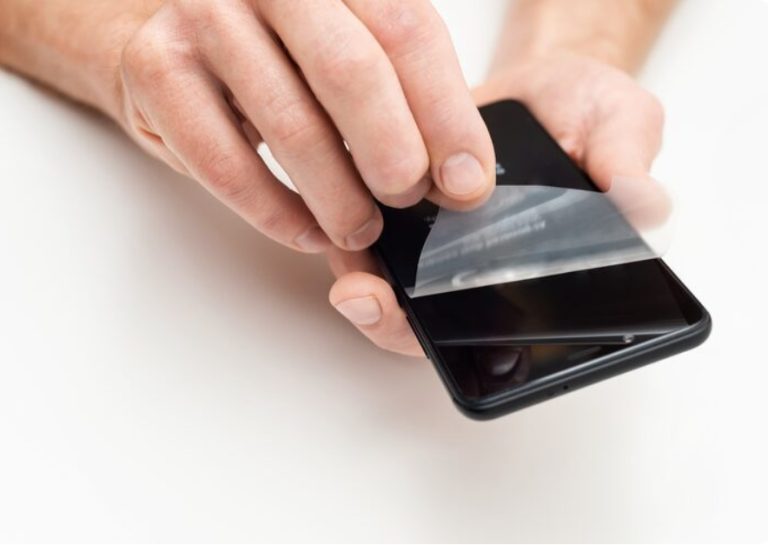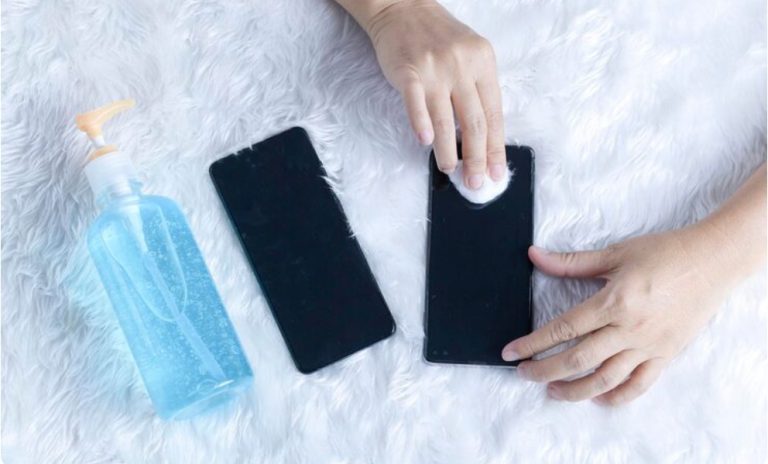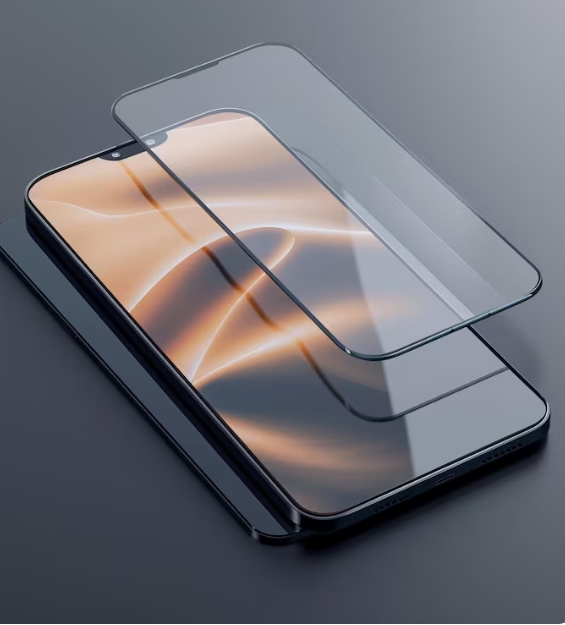

A properly engineered camera lens protector is designed to provide mechanical protection while minimizing optical interference. High optical transmittance helps maintain light transmission, while an anti-reflective coating can reduce surface reflections that may contribute to flare, ghosting, or reduced contrast under strong lighting. Surface treatments such as oleophobic and hydrophobic coatings can also help reduce fingerprints, oil, and other contaminants that may affect optical clarity.
For smartphone accessory brands, distributors, wholesalers, retailers, and OEM/ODM buyers developing products such as an iPhone 18 Pro Max camera lens protector or iPhone Duo camera lens protector, selecting a camera lens protector requires more than evaluating appearance or scratch resistance. Optical performance, camera-opening accuracy, alignment, glass and coating specifications, case compatibility, installation stability, and customization requirements should all be considered during product development and sourcing.
YCYMO develops camera lens protectors and other smart-device protection products for international B2B customers. Our product range includes different structural and design solutions with AR-related optical features, surface treatments, and customization options for brands seeking reliable camera protection and differentiated accessory programs.
Does an AR Camera Lens Protector Affect Photo Quality?
Using an AR camera lens protector does not automatically lower your picture quality. You might apply an AR camera lens protector for iPhone 18 Pro Max. On the other hand, you could use an AR camera lens protector for iPhone Duo or a completely different smartphone model. In all these situations, the actual optical effect relies on several specific details. For instance, basic light transmittance, surface reflectance, and general haze levels matter greatly. Furthermore, the overall coating performance and standard surface cleanliness play a major role. Finally, proper physical alignment and exact compatibility with the camera module will determine the final visual result.
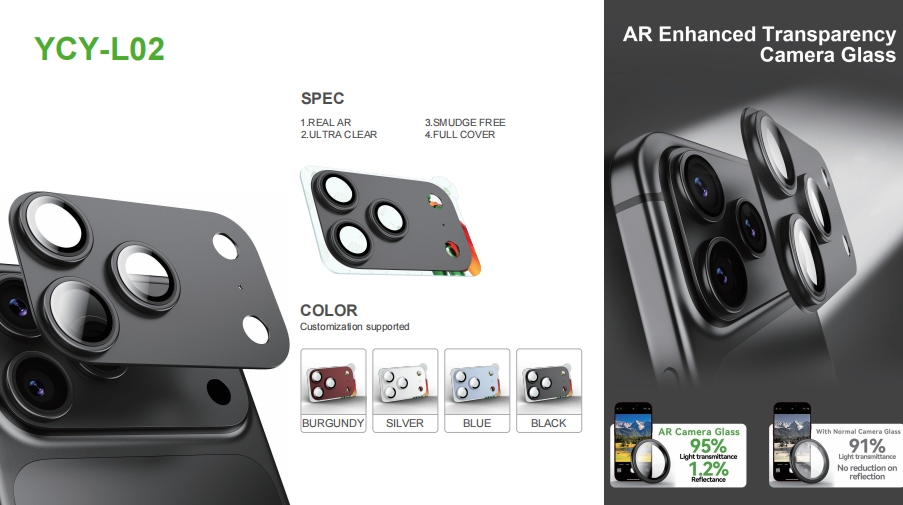
According to YCYMO’s current product reference data, the AR camera glass specification is listed with 95% light transmittance and 1.2% reflectance, while the referenced standard camera glass is listed at 91% light transmittance.
This does not mean the protector increases the camera’s native resolution. Instead, the purpose of AR treatment is to maintain high optical transmittance while reducing surface reflections that may contribute to flare, ghosting, or reduced contrast under strong light sources.
For buyers, this distinction matters. A camera lens protector should therefore be evaluated not only for mechanical protection but also for optical clarity, surface quality, aperture accuracy, alignment, and compatibility with the camera module.
Why Can a Camera Lens Protector Change Image Quality?
Light Transmission
Every additional transparent layer can absorb or reflect part of the incoming light. If the protector has low optical transmittance, less incident light reaches the camera sensor, which may affect exposure performance and image quality under low-light or high-dynamic-range conditions. This can become more noticeable in difficult lighting conditions.
An ultra-clear camera lens protector should therefore be evaluated using optical performance rather than relying only on descriptions such as "HD" or "clear."
Reflection, Glare, and Ghosting
Strong light sources often cause surface reflections. Examples include sunlight, streetlights, and LED bulbs. These reflections can lead to lens flare, ghosting, or veiling glare. Such optical details are very important. This is especially true when designing an iPhone 18 Pro Max camera lens protector. Customers want the protective glass to keep the original camera quality. They expect top performance from their high-end smartphone.
An anti-reflective (AR) coating is designed to cut down on the surface bouncing of light. It works across a specific range of wavelengths. This technology helps block annoying reflections. It also keeps the light passing through clearly. YCYMO uses special materials for the YCY-L01, YCY-L02, and YCY-L04 models. These items all include AR or AR-enhanced optical traits.
B2B buyers need to look at the whole picture. They should check reflection, glare, and clear light transfer. The exact fit of the camera hole is also vital. In addition, buyers must watch out for possible flash issues. All these factors must be evaluated together. It is not wise to look at just one single detail.
Fingerprints, Oil, and Water
A protector may maintain high optical clarity when clean, but fingerprints, skin oils, and other contaminants on the surface can increase light scattering and reduce perceived contrast. Smudges can scatter light and reduce perceived contrast, especially when photographing bright objects or lights.
YCYMO’s lens-protector materials describe hydrophobic and oleophobic coatings designed to resist water and oil.
For camera lens protectors, oleophobic and hydrophobic surface treatments can help reduce contamination and improve cleanability, supporting more consistent optical performance during daily use.
Dust and Misalignment
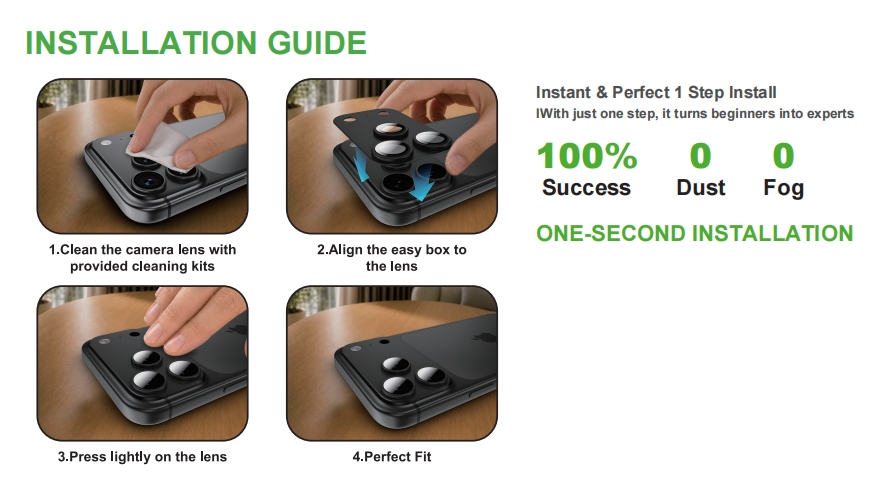
Even high-clarity optical glass can perform poorly if installation introduces dust, fingerprints, adhesive residue, haze, or aperture misalignment. Dust near the camera opening, fingerprints left during application, or inaccurate positioning can interfere with the intended optical path.
For retailers and repair stores, a controlled installation process can also help make results more consistent between different users.
How Does AR Coating Help Maintain Camera Clarity?
An AR coating reduces surface reflectance at the glass-air interface, allowing a greater proportion of incident light to transmit through the protective layer. It should not be confused with a technology that improves the smartphone camera sensor itself.
|
Optical Factor |
YCYMO AR Camera Glass Reference |
Normal Camera Glass Reference |
|---|---|---|
|
Light Transmittance |
95% |
91% |
|
Reflectance |
1.2% |
No reflection reduction stated |
|
Main Purpose |
Protection with reflection control |
Basic transparent protection |
For sourcing teams, the more useful question is whether the complete product combines suitable transmission, controlled reflection, accurate camera openings, a clean surface treatment, and stable positioning.
Does a Camera Lens Protector Work With a Phone Case?
Camera lens protector compatibility should be evaluated together with the phone case because case geometry, camera-module clearance, and protector thickness can affect edge contact and installation stability.
The current range also gives accessory brands several different design directions:
YCY-L01 uses an Eagle Eye-style individual lens-protection design with AR, ultra-clear, smudge-free, and full-cover positioning.
YCY-L02 uses a one-piece metal lens structure with AR-enhanced camera glass.
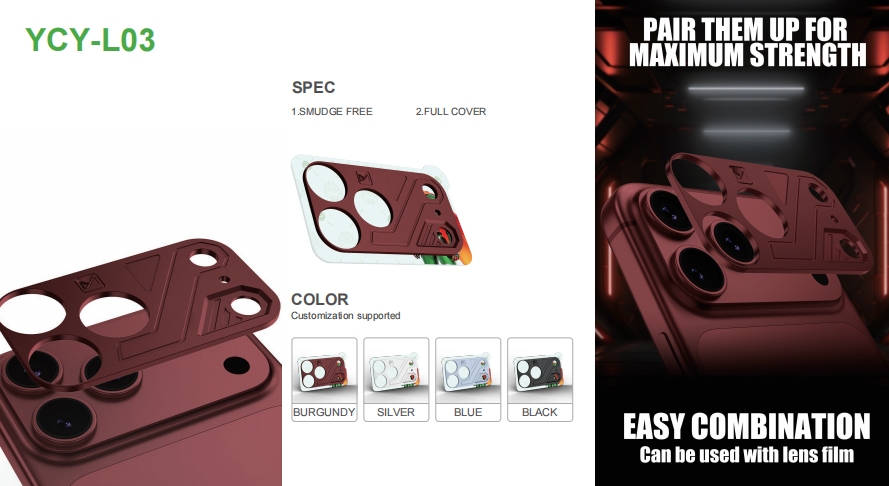
YCY-L03 is presented as a Mecha Lens Protector for a more distinctive mechanical-style appearance.
YCY-L04 combines AR-related features with DIY graphic customization.
This gives brands more room to differentiate a camera-accessory line by optical performance, integrated styling, mechanical aesthetics, or decorative design.
What Should Buyers Check When Sourcing AR Camera Lens Protectors?
For phone-accessory brands, sourcing should go beyond appearance. Buyers should check optical performance, camera-hole accuracy, surface coating, case clearance, installation method, packaging, and device-model confirmation before mass production.
This becomes especially important for new-device programs such as an iPhone 18 Pro Max camera lens protector or iPhone Duo camera lens protector. Final compatibility should be based on confirmed device dimensions, drawings, samples, and fit testing rather than assumptions taken from previous generations.
What Determines Camera Lens Protector Factory Direct Pricing?
Factory Direct Price should also be compared carefully. The final quotation can vary according to:
protector structure;
AR glass requirements;
metal components;
surface coating;
color and printing;
packaging;
installation accessories;
quantity and customization.
At YCYMO, we provide OEM and ODM support for customers developing their own protection-product programs. Our official website states that we operate our own factory with more than 7,000 m² of factory space, 70+ automated machines, and approximately 4.5 million screen protectors of monthly production capacity.
This manufacturing and customization capability supports both standard wholesale requirements and differentiated product programs for customers in Europe, North America, South America, Southeast Asia, the Middle East, and other international markets.
Conclusion
An AR camera lens protector can affect photo quality, but the result depends on much more than simply placing protective glass over a smartphone camera. Light transmission, reflectance, surface cleanliness, coating quality, dust, alignment, camera-opening accuracy, and case compatibility all matter.
When developing a new iPhone 18 Pro Max camera lens protector, iPhone Duo camera lens protector, or other model-specific camera protection program, we recommend confirming optical requirements and device fit first, then deciding on customization, packaging, installation method, order quantity, and Factory Direct Price.
Contact YCYMO to discuss iPhone 18 Pro Max camera lens protector, iPhone Duo camera lens protector, AR glass, sampling, customization, and model-specific OEM/ODM requirements.
FAQ
Q: Does an AR camera lens protector make photos blurry?
A: Not necessarily. Reduced clarity is more likely when the protector has poor optical quality, haze, fingerprints, contamination, or inaccurate alignment. A properly designed AR camera lens protector aims to control unwanted reflection while maintaining high light transmission.
Q: Is AR camera glass better than regular camera glass?
A: AR treatment is useful when reflection control is important, but overall performance still depends on the glass, coating, cleanliness, fit, and manufacturing quality. YCYMO’s current lens-protector material lists 95% light transmittance and 1.2% reflectance for its AR camera glass reference.
Q: Does YCYMO offer an OEM iPhone Duo camera lens protector?
A: YCYMO supports OEM/ODM development for model-specific camera protection products. An iPhone Duo camera lens protector program can be evaluated according to confirmed camera-module dimensions, protector structure, AR coating requirements, surface treatment, appearance customization, packaging, and order quantity.